

When I was in college, the distinction between Accounting and Finance seemed pretty straightforward. Accounting told us what happened. Finance took those numbers, waved a magic pen in the air, and somehow predicted what would happen next.
After almost 30 years in the profession, I’ve come to a different conclusion. Accounting and Finance are a team. We have different responsibilities and areas of expertise, but ultimately, we’re working toward the same objective: helping the organization succeed.
And in smaller organizations, there may not even be a separate Finance department. Guess what? Accounting is Finance.
Surprise!
So while our traditional responsibilities remain essential, I believe the expectations of Accounting and Finance professionals have evolved considerably. And that’s a good thing.
🛡️ Compliance Is the Foundation, Not the Destination

Let’s start with something that shouldn’t be controversial. Accurate financial reporting, effective internal controls, and regulatory compliance are essential.
I’ve spent much of my career walking into organizations where these fundamentals weren’t working particularly well.
In one role, I inherited an SEC reporting process that was significantly behind schedule. Within my first quarter, we brought the reporting process back into compliance and filed within the permitted extension period.
Thank you, Rule 12b-25!
For those unfamiliar with SEC reporting, that rule allows a limited extension under certain conditions. Would I have preferred to file without needing it? Absolutely. But getting the organization back on track was an important first step.
With reporting stabilized, we could move forward with other priorities, including returning to the capital markets to raise additional funding.
I’ve also seen the other side. Organizations where weaknesses in internal controls, financial reporting, and accounting estimates were warning signs of deeper financial problems. In one situation, those problems ultimately ended in bankruptcy.
How can executives make good decisions if they don’t have confidence in the books and records? They can’t. At least not responsibly.
Compliance establishes credibility and trust. But it doesn’t automatically create strategic value. Compliance is the foundation. It isn’t the destination.
Getting the books right earns us credibility. What we do with that credibility is what differentiates us.
📊 Financial Reporting Looks Backward. Business Insight Looks Forward.
Much of our accounting education focuses on historical information. We learn to record transactions, apply accounting standards, and report what happened. And we’re taught to be very careful about introducing forward-looking information into financial statements. For good reason.
But look beyond the financial statements in a Form 10-K or 10-Q. Management’s Discussion and Analysis, risk disclosures, and liquidity discussions provide context about trends and uncertainties that may affect future performance.
Management needs that context because executives aren’t making decisions about last February. They’re making decisions about next February.
Where should we invest? Can we afford another location? Should we change pricing? How much working capital will we need? Those are forward-looking questions.
Accounting brings an understanding of transactions, controls, estimates, and financial information. Finance brings forecasting, modeling, and capital planning. Neither function has a monopoly on understanding the business. And in certain circumstances, Accounting may need to provide both.
That means we can’t simply hand management a financial package and consider our job finished.
Imagine reporting that gross margin declined three percentage points. The number is accurate. The reconciliation is perfect. The report was delivered on time.
Wonderful.
But what does it mean? Was it pricing? Product mix? Labor costs? Materials? Lower production volumes? And more importantly, what should management do about it?

In Chapter 6 of Leading Beyond the Ledger, “Learn the Business. Not Just the Books,” I discuss why understanding the underlying business is essential to becoming an effective Accounting and Finance leader.
Our objective isn’t simply to report the numbers. It’s to help management understand what they mean.
🔮 Move From Explaining Results to Anticipating Outcomes
Let’s stay with that margin decline. Understanding why margins declined is important. But knowing why doesn’t help much if we don’t consider what happens next.
How often have we seen Accounting report a variance, only to hear:
“Well, Operations needs to explain that.”
Perhaps they do. But should our responsibility end there? I don’t think so.
I’m not suggesting Accounting should know more about production than the people running the plant. But when we see an anomaly, we should raise our hands and then work with the business to understand it.
Suppose material costs increased unexpectedly. Is the increase temporary? Have suppliers announced additional increases? Can we negotiate better pricing? Should we adjust customer prices? What happens to our forecast if costs remain elevated?
And if the increase is unavoidable, should we reset expectations?
Sometimes our greatest contribution is helping management recognize that the original plan is no longer realistic. I’d rather tell management in March that we have a problem than wait until November to announce we’ve missed our annual targets.
By then, the only remaining strategy may be hoping December has 47 days.
Forecasting, scenario planning, and sensitivity analysis help us evaluate alternatives before problems become surprises.
We don’t need a crystal ball. We need reliable information, reasonable assumptions, and the willingness to ask what could happen next.
⚖️ Help Management Understand the Trade-Offs
Have you ever stepped into a new leadership role, introduced yourself to colleagues in other departments, and been greeted with a limp handshake and a polite version of:

“That’s nice. Now please go away.”
I’ve experienced it. Sometimes you discover that your predecessor provided inaccurate information or routinely said no to requests without offering alternatives. Eventually, other departments simply stopped asking.
Rebuilding that trust can be difficult. One way to do it is to stop being the department that only identifies problems and start helping management evaluate options.
Consider a request for additional headcount. The easy answer is, “It’s not in the budget.”
End of discussion.
But what if we asked a few more questions? Would the position reduce overtime? Increase capacity? Improve customer service? Could temporary staffing or outsourcing accomplish the same objective?
Perhaps the request isn’t justified. Or perhaps the additional expense creates greater value elsewhere. Our job is to help management understand the trade-offs involving profitability, cash flow, working capital, risk, and long-term consequences.
In Chapter 8 of Leading Beyond the Ledger, “From ‘No’ to ‘Yes, if…’,” I explore this concept.
Sometimes no is absolutely the correct answer. But “No, we cannot do it that way, but here’s an alternative worth considering” is a much more productive response.
When we consistently provide reliable information and practical alternatives, people start coming back. Not because they have to, but because they value what we contribute.
🚀 Redefine What Success Looks Like for Accounting and Finance
So how should we measure success? Traditionally, we’ve focused on the monthly close, audit results, reporting deadlines, reconciliations, and compliance.
Those measures still matter.
But suppose we closed the books in six days this month instead of five. Is that a failure? Maybe. But what if that additional day allowed us to identify a significant issue and provide management with more reliable information?
Speed matters. Accuracy matters. And usefulness matters.
The same applies to forecasting. We might produce a beautiful 13-week cash flow forecast, complete with formulas, assumptions, and more tabs than anyone should reasonably have to navigate.
But when actual results differ from the forecast, do we simply update the spreadsheet? Or do we investigate why, work with the business, and improve the next forecast?
I’d also look at how the rest of the organization interacts with Accounting and Finance. Are we invited to Sales and Operations meetings because our participation adds value? Does Product Development seek our input before committing resources? Does Procurement involve us in significant purchasing decisions?
And more importantly, is our involvement leading to better decisions, stronger cash flow, improved profitability, or reduced risk? Those outcomes are harder to measure than the number of days it takes to close the books, but they’re ultimately why we want to be involved.
In Chapter 11 of Leading Beyond the Ledger, “So You’re in the Meeting—Now What? Show Up Like a Strategic Partner,” I discuss contributing meaningfully once we’re involved in business discussions.
Our success shouldn’t be measured only by the reports we produce, but by the value we help create.
🎯 Beyond the Ledger
I don’t believe Accounting and Finance should abandon their traditional responsibilities. Quite the opposite. Without accurate financial information, effective controls, and sound compliance practices, we have no foundation upon which to build.
But those responsibilities are the starting point. We need to understand what the numbers mean, anticipate what might happen next, evaluate alternatives, and help management make better decisions. I’ve seen what happens when foundations are weak, and what becomes possible when they’re strong. The next step is making sure we don’t stop once the books are right.
Compliance tells the business where it stands. Strategic Accounting and Finance help the business decide where to go.
And that, to me, is what it means to lead beyond the ledger.
📖 Want to explore these ideas further?
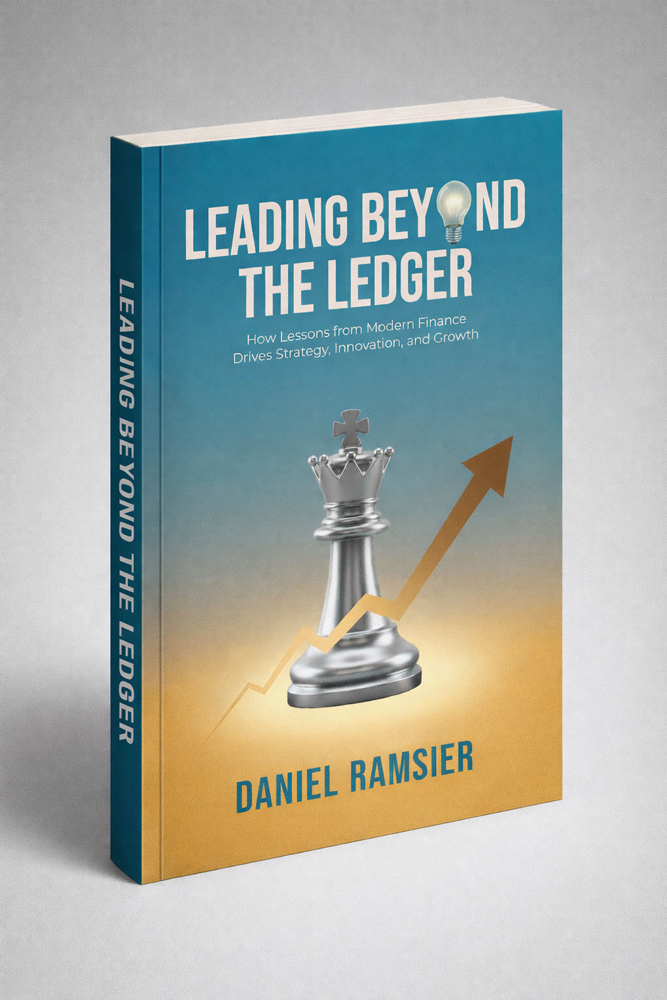
These themes are explored in greater detail in my book, Leading Beyond the Ledger, particularly Chapter 6, “Learn the Business. Not Just the Books,” Chapter 8, “From ‘No’ to ‘Yes, if…’—How Finance Becomes a Strategic Partner,” and Chapter 11, “So You’re in the Meeting—Now What? Show Up Like a Strategic Partner.”
The book explores how Accounting and Finance professionals can move beyond traditional responsibilities to become trusted advisors and strategic partners who help their organizations succeed.
Follow us on:
 LinkedIn – Not Just A Bean Counter
A note on AI: The ideas, opinions, stories, and occasional bad accounting jokes in this article are my own. I use ChatGPT as an editing tool to help with grammar, organization, and clarity. I’m an accountant, not a writer. Accounting good. Grammar bad.