
I first explored some of these ideas in an article published in May 2026. As part of the next phase of Not Just a Bean Counter, I’ve revisited and expanded on those thoughts. The premise hasn’t changed: great Accounting and Finance leaders don’t need to have all the answers. But I’ve come to believe there’s more to it than simply asking better questions. It’s also about knowing what you don’t know, building relationships that get you into the conversation earlier, and creating an environment where the right answer can emerge.
We as Accounting and Finance professionals struggle with a lot. Yes, I know we appear on the outside to be the wise sage-like individuals on the management team. And, yes, I know we are tolerated in that capacity partly because we track and monitor one of the most important things to every business owner: their money.
In that role, we are expected to know the answer to every question. Talk about pressure! What is the tax consequence if we buy a new truck for the business? I don’t know, not off the top of my head. I deal with taxes as they come up. I know there is something about the truck being used for business purposes more than 50% of the time. There is something else about limitations if it is an SUV. And something else about it weighing more than 6,000 pounds GVWR. Thanks, ChatGPT!
See that? I’m a CPA with more than 25 years of experience, and I have some idea about taxes. Enough to be dangerous and, more importantly, enough to know what questions I need to ask. But I can barely do my own tax return.
And taxes are just one example. Ask us about revenue recognition, leases, stock compensation, business combinations, impairment, cash flow classification or any of the countless other technical accounting issues we encounter. There are rules, exceptions to the rules, exceptions to the exceptions, and interpretations of all of the above.
Just how much are we expected to know? I asked ChatGPT to estimate how many pages the Accounting Standards Codification (“ASC,” aka U.S. GAAP) would be if you printed the whole thing. Its estimate was somewhere between 5,000 and 6,000 double-sided pages. The Internal Revenue Code and related material would add roughly another 3,000 to 4,000 pages. That’s somewhere between 8,000 and 10,000 pages of rules for us to know, and that’s before we even get to the interpretations.
Every major accounting firm has its own accounting guidance. PwC has Viewpoint. EY has its Financial Reporting Developments, affectionately known as the “FRDs,” pronounced “Freds.” Deloitte and KPMG have their own libraries as well. These resources exist for a reason: even the experts need somewhere to look things up.
Then put on your broader finance hat. Now we’re supposed to understand cash flow analysis, ROI, ROE, valuation, projections, 13-week cash forecasts, EBITDA normalization, value leakage, operating leverage, unit economics…and the list goes on.
I think you’re getting my point. But here’s the rub:
The best Accounting and Finance leaders do not have all the answers.
As a business leader, your reaction might be, “What???” Hear me out.
🎯 Accountants Are Trained to Be Right
From an early age, you can probably tell which children are destined to become accountants. Does your child sort the jelly beans by color before eating them? Do they keep a log of every transaction involving their birthday money? You may have a future accountant on your hands.
Then we get to school, where our need to be right really takes off. We are graded and rewarded for getting the correct answer. That continues through college. After graduation, many of us sit for professional certifications: CPA, CFA, CFP and the various securities “Series” exams. All are built around the same basic concept: there is a right answer. Find it.
Then we enter the real world and discover something unsettling. Sometimes there isn’t one. Instead, we are introduced to concepts like “reasonable,” “supportable” and my personal favorite, “materially correct.”
“Materially correct” is a little like “mostly dead” in The Princess Bride. As Miracle Max might explain, there’s a big difference between mostly correct and all correct. In Accounting and Finance, the question is whether that difference is worth another $50,000 in audit fees to figure out.
Yet our training stays with us. Someone asks a question and our instinct is to answer it. We are the Accounting and Finance people. We’re supposed to know. That instinct serves us well when we actually know the answer. It can get us into trouble when we don’t.
🔍 “I Don’t Know, But I Will Find Out”
The best Accounting and Finance professionals make an effort to stay current. We read. We research. We attend CPE. We surround ourselves with specialists. We learn from experience. But as I noted above, it is nearly impossible to know everything.
And that’s okay.
In fact, I believe this is one of the things that separates the best leaders from the rest: they are comfortable knowing that they don’t know everything.
Think about two possible responses to a question. The first is to give the answer you think is right because you feel like you’re supposed to know it. The second is, “I don’t know. Let me find out.”
Which response creates the better outcome? One satisfies our need to have an answer. The other demonstrates our commitment to getting the answer right.
There is an important distinction here. Saying “I don’t know” isn’t an excuse for being unprepared. If you’re the CFO and someone asks how much cash the company has, “I don’t know” probably isn’t your finest leadership moment. There are things we absolutely should know. But there are also things we should recognize require more research, more information or expertise that we don’t personally possess.
Knowing where your expertise ends is itself a form of expertise.
Perhaps that is one of the differences between being a technical expert and being a leader. Technical experts are often expected to have answers. Leaders need to know when to answer, when to ask another question, when to bring in someone who knows more and when to simply say, “I don’t know, but I will find out.”
This is also a theme I explore in Chapter 10.5 of Leading Beyond the Ledger, “Courage—The Missing Metric That Drives Influence.” Sometimes leadership requires the courage to admit uncertainty rather than offering an answer simply because everyone expects us to have one.
🤝 Ask the Operators What They Are Trying to Do
One of the biggest themes in my book, Leading Beyond the Ledger, is building relationships. In Chapter 5, “Build Cross-Functional Credibility and Trust,” I discuss why those relationships matter. I also explore learning the business and becoming an interpreter between Accounting and Finance and the rest of the organization. There is a reason for that. Those relationships give us the opportunity to understand what is happening in the business before the issue arrives on our desk.
If the first time you hear about a complicated transaction is after the contract has been signed, your options may already be limited. If you learn about it while the deal is still being discussed, you have time to understand what the business is trying to accomplish, research the accounting implications, think through the cash flow or financial impact, consult with specialists if necessary and come to the table prepared.
That is a very different role.
The goal should not be to become exceptionally good at saying, “I don’t know, but I will find out.” There will always be times when we need to say it, and we should be comfortable doing so. But strong relationships with the people operating the business can help us say it less often.
That starts with asking what they are trying to accomplish. Why is the customer asking for this? Are we considering a different contract structure? Is Operations thinking about changing a process? Is Sales negotiating an unusual term? Is HR considering a new compensation arrangement? Is IT evaluating a new system?
The earlier Accounting and Finance are part of those conversations, the more opportunity we have to ask questions, do the research and be prepared when the business needs an answer.
That is also why relationships matter so much. We want people throughout the organization to call us when they are thinking about doing something, not after they have already done it. We want to be invited to the meeting where the issue is being discussed, not copied on the email announcing the decision.
When that happens, we are much less likely to be blindsided. We have time to understand the issue, identify the questions we need to answer and do our homework. Then, when everyone sits down at the table, we can contribute rather than react.
Ironically, accepting that we cannot know everything should make us more prepared, not less. We know there will be questions we cannot answer off the top of our heads, so we build the relationships and communication channels that help us see those questions coming.
❓ Leadership Is About Asking Better Questions
Early in our careers, much of our value comes from knowing answers. How do we account for this transaction? Why doesn’t the account reconcile? What does the standard require? Where did the variance come from?
As we move into leadership, the questions change. Why are we doing this? What happens if we don’t? What assumptions are we making? What does the customer want? What are the operators trying to accomplish? What aren’t we considering? What could go wrong? What opportunity are we missing? And perhaps most importantly: What do I need to know before we make this decision?
Leadership requires a different kind of confidence. It isn’t the confidence to walk into every room believing you have the answer. It is the confidence to walk into a room knowing that you may not, and asking the questions that will help you get there.
That means creating an environment where your team can challenge you. It means asking the people closest to the work what they think. It means recognizing expertise throughout the organization and being willing to change your mind when someone presents better information. It also means recognizing an issue early enough to do the research, involve the right people and come back prepared.
None of that diminishes your expertise. It makes your expertise more useful.
Because the objective was never to prove that Accounting and Finance were right. The objective was to help the business make the right decision.

💡 Make the Conversation Smarter
The best Accounting and Finance leader in the room doesn’t need to be the smartest person in the room. In fact, if you’re consistently the person who knows the most about every subject being discussed, you probably need different people in the room.
Great leaders surround themselves with people who know things they don’t. They ask questions. They listen. They challenge assumptions, including their own. They connect information from across the organization and make sure the right expertise is part of the conversation. And when they don’t know something, they aren’t afraid to say so.
That doesn’t mean expertise no longer matters. Quite the opposite. Our technical knowledge gives us credibility and helps us know which questions need to be asked. Our experience helps us recognize when something doesn’t look right. Our relationships help us identify issues before they become surprises. And our training gives us the discipline to keep digging until we understand them. Leadership requires us to put all of those things together.
Our profession trains us to find the right answer. Leadership asks something more of us: to create an environment where the right answer can emerge, even when it doesn’t come from us.
So the next time someone asks you a question and you don’t know the answer, it’s okay to say, “I don’t know.” In fact, sometimes that is exactly the right answer.
But don’t stop there.
Ask another question. Understand what they are really trying to accomplish. Determine what you need to know. Talk to the people who understand the issue. Do the research. Bring in an expert when you need one. Then come back with an answer you can stand behind.
Better yet, build the relationships that get you into the conversation early enough to do all of that before someone needs the answer.
Because being a great Accounting and Finance leader isn’t about proving you’re the smartest person in the room.
It’s about making the room smarter.
Ready to lead beyond the ledger? 🚀
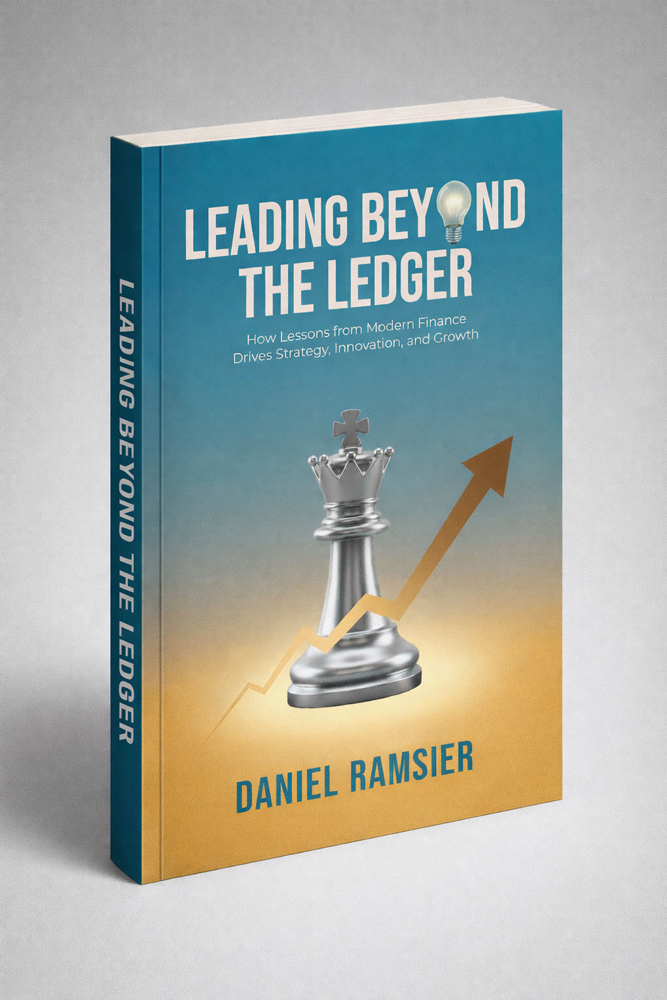 Read more in my book! Here on Amazon!
Follow us on:
 LinkedIn – Not Just A Bean Counter
A note on AI: The ideas, opinions, stories, and occasional bad accounting jokes in this article are my own. I use ChatGPT as an editing tool to help with grammar, organization, and clarity. I’m an accountant, not a writer. Accounting good. Grammar bad.