
“That’s How We’ve Always Done It”
I originally published a version of this article in January 2026. As I begin the next phase of Not Just a Bean Counter and explore what it really means for Accounting and Finance professionals to lead beyond the ledger, I wanted to come back to where this series began. The ideas still hold, but the article deserved another look. Consider this SALY 2.0.
May I ask a simple question?
What is the most dangerous phrase in Accounting and Finance?
Some might say, “We’re at a loss.” Others might suggest, “Margins are eroding,” or perhaps the particularly unpleasant, “We’re out of cash!”
Those are serious statements. Loud ones. The kind that get everyone’s attention very quickly.
But in my humble, and well-earned, opinion, the most dangerous phrase in Accounting and Finance is much quieter:
“That’s how we’ve always done it.”
It sounds harmless. Responsible, even. After all, Accounting and Finance are supposed to value consistency. We create processes, establish controls, document procedures and expect people to follow them. There are very good reasons we don’t reinvent the chart of accounts every Tuesday.
But there is a difference between consistency and complacency.
“That’s how we’ve always done it” can masquerade as discipline when it is really just comfort. It can preserve an outdated process, perpetuate an assumption nobody remembers making and allow yesterday’s solution to become today’s problem.
And Accounting and Finance professionals have our own name for it.
👋 Meet SALY
If you’ve spent any time in audit or accounting, you’ve probably met her.
SALY. Same As Last Year.
SALY has been part of accounting folklore for as long as I can remember. She prepared last year’s workpapers. She approved last year’s assumptions. Apparently, she knew something we don’t.
Not sure how to prepare the schedule? “Same as last year.”
Wondering whether an assumption still makes sense? “Nothing changed.”
Need to document the process? “Just roll forward last year’s file.”
SALY is efficient. And to be fair to her, sometimes she is exactly right.
There is no reason to redesign a perfectly good process simply because another year has passed. Prior-year work gives us a starting point. Consistency matters in financial reporting. Standardization makes organizations more efficient. Controls are supposed to operate consistently. If something worked last year and the underlying facts haven’t changed, doing it the same way again may be entirely appropriate.
The problem begins when we stop asking whether the underlying facts have changed.
Because SALY isn’t a framework.
She’s a habit.
📚I Grew Up With SALY
I’ve been in or around the Accounting and Finance profession for more than 25 years. Actually, it goes back further than that. I took accounting in high school using actual ledger cards. Yes, I’m dating myself.
In college, I chose accounting over engineering and never looked back. My first job out of school was at a local CPA firm, where SALY quickly became a trusted member of the engagement team. I later encountered her at regional firms, Big Four firms and eventually inside corporate Accounting and Finance organizations.
The logic was understandable. If the workpaper passed review last year, start with it this year. If the process worked last month, use it again this month. If the control satisfied the auditors before, why change it?
There is nothing inherently wrong with any of that.
The problem is what happens when “start with last year” quietly becomes “don’t question last year.”
Because the business changed. The systems changed. The risks changed. The customers changed. The regulations may have changed. The people definitely changed. Sometimes the transaction itself changed while the workpaper used to account for it did not.
SALY just kept showing up.
At some point in my career, my view became pretty simple:
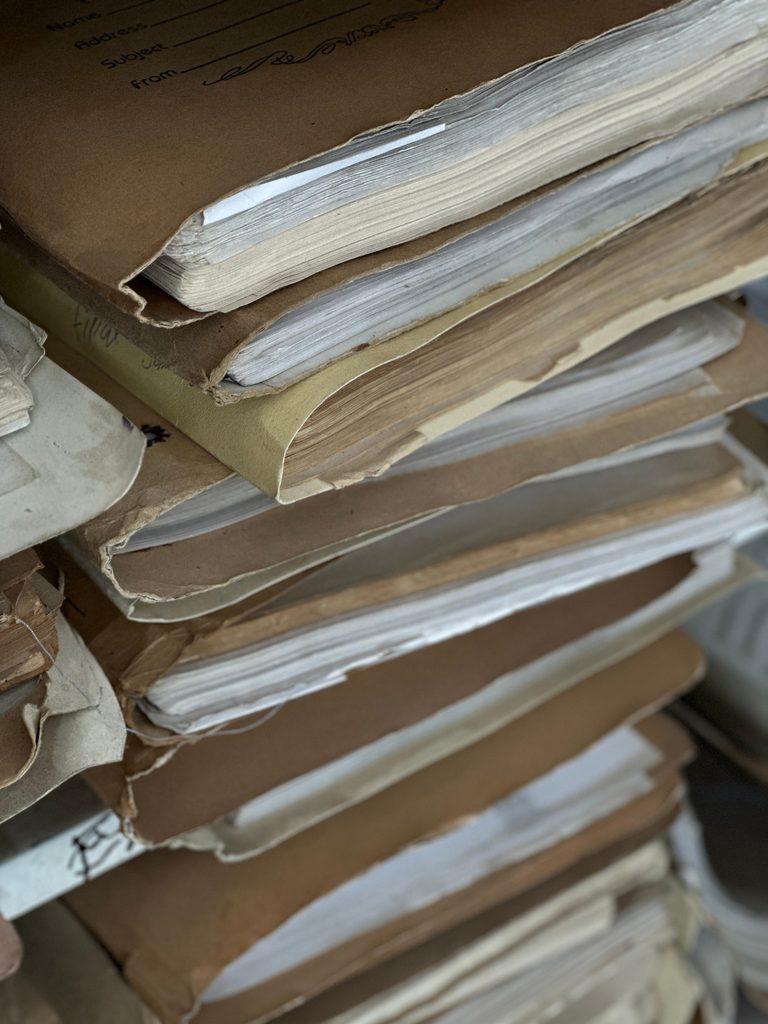
SALY doesn’t live here anymore.
That doesn’t mean we throw away everything from last year. It means last year doesn’t get to make this year’s decisions.
⏳ Why SALY Is So Hard to Evict
There is a reason SALY has survived for so long. She’s fast.
Accounting and Finance organizations live with deadlines. We close the books every month. We file reports. We prepare budgets and forecasts. We answer auditors. We reconcile accounts. We respond to management. We deal with whatever unexpected issue landed in our inbox at 4:37 on a Friday afternoon.
Thinking takes time. Rolling forward last year’s spreadsheet does not.
So SALY can look a lot like efficiency.
The danger is that efficiency without curiosity can simply help us do the wrong thing faster.

Consider a reconciliation that takes someone four hours every month. Maybe it was necessary ten years ago when two systems didn’t communicate with each other. The systems have since changed, but the reconciliation remains because it is on the close checklist.
Or perhaps management receives a 40-page monthly reporting package. Nobody remembers who originally requested half of the schedules. Some of the recipients don’t even open them anymore. But every month, Accounting and Finance spend hours producing them because that’s what we did last month.
Maybe there is an approval control that was created because of a problem six years ago. The process, systems and people have changed, but nobody has revisited whether the control still addresses a meaningful risk.
These things don’t usually look dangerous individually. That’s precisely why they survive.
Over time, however, outdated processes consume capacity. Old assumptions create blind spots. Unnecessary controls frustrate the business. Reports nobody uses take time away from analysis people actually need.
Eventually, “that’s how we’ve always done it” stops protecting the organization and starts holding it back.
In Leading Beyond the Ledger, I discuss the importance of modernizing Accounting and Finance, not simply by introducing new technology, but by rethinking how we work. Chapter 9, “Invest in Modern Tools and Talent,” explores how we can free up capacity for more valuable work. After all, automating an unnecessary process doesn’t suddenly make that process necessary.
🔍 Challenge the Process, Not Just the People
There is an important distinction here. Challenging SALY does not mean encouraging everyone to ignore established processes whenever they feel like it.
That would be chaos.
Accounting and Finance need structure. We need controls. We need consistency. We need documentation. There are processes that should be performed the same way every single time because consistency is precisely what makes them effective.
The question is whether we still understand why we are doing them.
When I look at an existing process, report, reconciliation or control, I like questions such as: What problem is this solving? What risk are we managing? Who uses this information? What decision does it support? Has something changed since we designed it? If we stopped doing this tomorrow, what would happen?
Those questions are not attacks on the people who created the process.
In many cases, the process made perfect sense when it was created. The person who designed it may have solved a very real problem at the time. But organizations evolve, and a good solution to a 2018 problem is not automatically a good solution to a 2026 problem.
That is why continuous improvement should not be viewed as criticism of the past.
It is a responsibility to the present.

💡Last Year Is a Starting Point
I don’t want to be unfair to SALY.
Last year’s work is useful. In fact, I’d be pretty concerned if an Accounting and Finance team completely ignored everything it had learned previously and started from scratch every January.
The problem isn’t asking, “What did we do last year?” That’s actually a very reasonable question.
The problem is stopping there.
The next questions should be: What changed? What matters now? Are the assumptions still valid? Is the risk still the same? Does anyone still use this? Is there a better way to accomplish the same objective?
That small shift changes the role of prior-year information. Instead of being the answer, it becomes evidence.
Last year should inform our thinking, not replace it.
This is particularly important for leaders. If we want our teams to challenge outdated processes, we have to give them permission to do it. We cannot ask people to think critically and then respond to every suggestion with, “That’s not how we do it here.”
Curiosity makes someone ask, “Why are we still doing this?” Courage makes them actually say it out loud. As leaders, we need both. In Chapter 10.5 of Leading Beyond the Ledger, “Courage—The Missing Metric That Drives Influence,” I explore why speaking up, challenging assumptions, and being willing to question established practices are essential to leadership. We have to create an environment where questioning an established process is not viewed as questioning the person who created it. If our people are afraid to challenge the way something has always been done, SALY hasn’t really moved out. She’s just gotten quieter.
That is how continuous improvement becomes part of the culture rather than an annual initiative. We stop waiting for a transformation project, a new system or a new leader to force us to rethink how we work. Instead, asking whether there is a better way becomes part of how Accounting and Finance operate every day.
Sometimes someone will challenge a process and the answer will be, “Actually, it does still make sense, and here’s why.”
That’s okay too.
The objective isn’t change for the sake of change.
The objective is intentionality.
🚪SALY Doesn’t Live Here Anymore
As Accounting and Finance professionals, we spend a lot of time looking backward. That’s part of our job. We close historical periods, report historical results, analyze historical performance and maintain records of what happened.
But our responsibility to the business cannot end there.
The information we produce should help people understand what is happening now and make better decisions about what happens next. That requires us to bring more than consistency to the table. It requires curiosity and, sometimes, the courage to challenge something that everyone else has simply accepted.
So keep last year’s workpaper. Keep the process that still works. Keep the control that still mitigates a meaningful risk. Keep the report somebody actually uses.
Just don’t keep any of them because they’re what we did last year.
Ask why. Ask what changed. Ask whether the work still serves a purpose. And make sure your team knows they are allowed to ask those questions too.
Accounting and Finance should absolutely learn from the past.
We just shouldn’t live there.
SALY doesn’t live here anymore.
Ready to lead beyond the ledger? 🚀
 Read more in my book! Here on Amazon!
Follow us on:
 LinkedIn – Not Just A Bean Counter
A note on AI: The ideas, opinions, stories, and occasional bad accounting jokes in this article are my own. I use ChatGPT as an editing tool to help with grammar, organization, and clarity. I’m an accountant, not a writer. Accounting good. Grammar bad.